03 — COMPASS

ROLE
Independent concept · Solo product designer · Fintech · Decision Support · Product Design
TOOLS
Claude · Figma · ChatGPT · Adobe Creative Suite
THE PROJECT
Project overview
Independent concept · Solo product designer · 2026. I designed Compass to help people decide what to do with each paycheck—not simply review financial dashboards. The work covers product framing, information architecture, decision flows, reusable interface patterns, high-fidelity screens, and a prototype prepared for usability testing.
The challenge
Most financial apps tell people where their money is. Fewer help them decide what to do with it. Compass explores how cash flow, debt, savings, investments, and goals can work together as a decision-support system rather than a collection of disconnected numbers.
The product question
What should a person see first when every financial number competes for attention?
I designed Compass around the user’s immediate decision rather than exposing every piece of financial information at once. Progressive disclosure keeps the experience focused while allowing deeper exploration when needed.
A system for real trade-offs
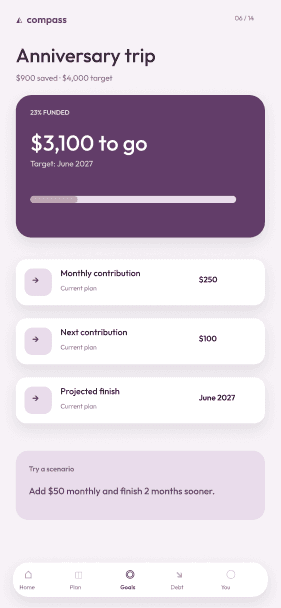
The 14-screen product system brings monthly cash flow, essential costs, debt repayment, retained buffers, savings goals, and scenarios into one calm planning flow. Different decisions use different information structures while sharing a consistent navigation and visual language.
Dashboard and direction
The dashboard leads with the amount available after essentials, then connects that figure to debt progress, active goals, upcoming contributions, and shortcuts for reviewing scenarios. This turns a financial snapshot into a useful direction.
Cash flow and goals
Cash flow separates income, essential bills, living costs, debt minimums, and an intentionally unassigned buffer. Goal details show progress, remaining amount, target timing, and the current contribution plan so users can understand the consequence of a choice before changing it.
My contribution
I developed the product strategy, information architecture, interaction model, interface system, high-fidelity mobile screens, and editorial case-study presentation. The work is a product-design concept using sample financial data and is ready for usability testing.
Next validation step
The next round should test whether people correctly interpret “available after essentials,” understand why a buffer remains unassigned, and can compare debt and savings scenarios without losing confidence in their current plan.

© 2026 Michael Ajibola